Seasonal production cycles create both opportunity and pressure for manufacturers. Late Q4 holiday demand, early Q1 retail resets, promotional campaigns, and limited-time product variations often require rapid product switches on packaging lines. While these seasonal changeovers can drive revenue growth, they also introduce risk—particularly in the form of downtime.
Every minute a line is stopped for a product change represents lost throughput, labor inefficiencies, and potential shipping delays. For bottling operations, beverage producers, and household goods manufacturers, frequent SKU changes can quickly erode margins if not handled efficiently.
Custom automation offers a powerful solution. By implementing changeover-optimized conveyors, smart bottle turners, automated pallet handling systems, and integrated controls, manufacturers can dramatically reduce downtime during seasonal transitions. This article explores how automation strategies help streamline product switches and keep production moving when it matters most.
The Real Cost of Seasonal Changeovers
Changeovers are more than a simple product swap. They often require:
- Adjusting guide rails and conveyor widths
- Reconfiguring bottle orientation equipment
- Swapping out tooling or grippers
- Updating labeling and coding systems
- Resetting pallet patterns
- Cleaning and sanitizing equipment
When handled manually or with outdated systems, these steps can take hours. Multiply that across multiple seasonal SKUs, and the downtime becomes significant.
In peak production months, extended changeovers create ripple effects throughout the facility—causing backlog at upstream processes, overtime labor costs, and strain on downstream logistics.
Custom automation minimizes these disruptions by building flexibility and intelligence directly into the line.
Changeover-Optimized Conveyor Systems
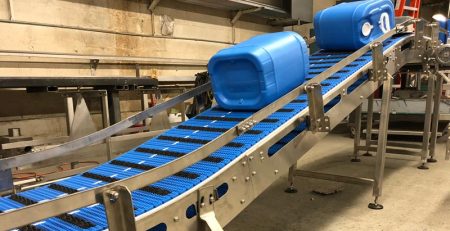
Conveyors are central to any packaging operation. During changeovers, however, traditional conveyors often require manual rail adjustments, mechanical repositioning, or even component swaps.
Custom-designed conveyor systems can dramatically reduce this burden.
1. Tool-Less Adjustable Guide Rails
Modern conveyor systems can incorporate quick-adjust guide rails with calibrated settings for different bottle sizes. Instead of manually measuring and aligning rails, operators can adjust to pre-set positions in minutes.
2. Servo-Driven Width Adjustments
Advanced conveyors use servo motors to automatically adjust width at the push of a button. Recipes stored in the control system allow operators to select the new product format, triggering automated repositioning.
3. Modular Conveyor Sections
Modular conveyor designs allow sections to be swapped or reconfigured quickly. For seasonal promotions that require different packaging formats, modularity prevents full-line redesign.
By minimizing mechanical intervention, these systems significantly reduce changeover time and lower the chance of misalignment errors.
Smart Bottle Turners and Orientation Systems
Bottle orientation is a common bottleneck during product transitions. Different SKUs may require label-facing orientation, neck alignment for capping, or barcode positioning for scanning.
Manual adjustments to orientation equipment increase downtime and introduce inconsistency.
Custom automation solutions address this with intelligent systems.
Vision-Guided Orientation
Vision systems detect bottle position in real time and trigger turning mechanisms only when necessary. When switching to a new SKU, updated parameters can be loaded into the system without mechanical changes.
Recipe-Based Controls
Orientation equipment integrated with PLC controls allows operators to select stored configurations for different bottle types. This eliminates trial-and-error adjustments.
Adjustable Handling Components
Quick-change grippers, adjustable belts, and servo-driven turning arms allow rapid transitions between container shapes and sizes.
These smart systems maintain consistent bottle presentation while reducing setup time during peak seasonal runs.
Automated Pallet Handling for Faster Transitions
Seasonal promotions often involve different case pack sizes or pallet patterns. Manual pallet adjustments can delay restarts and create ergonomic strain for workers.
Automation reduces these inefficiencies.
Automated Palletizers with Pattern Memory
Modern palletizers store multiple stacking patterns. When a product switch occurs, operators simply select the appropriate configuration.
Automatic Pallet Dispensers
Automated pallet handling systems eliminate the need for manual pallet staging, reducing labor demands during busy seasons.
Integrated Conveyor-to-Pallet Flow
Coordinated systems ensure seamless transfer from packaging to palletizing, reducing interruptions when product dimensions change.
By reducing reliance on manual adjustments, automated pallet handling accelerates restarts after changeovers.
“By implementing changeover-optimized conveyors, intelligent orientation systems, automated pallet handling, and integrated control platforms, manufacturers can reduce setup time, maintain line balance, and protect productivity during peak production periods.”
Integrated Control Systems: The Brain of the Operation
Hardware improvements are only part of the solution. The true power of custom automation lies in integrated control systems.
Recipe-based PLC and HMI systems allow entire line configurations to change with a single command. Instead of manually adjusting each machine, operators select the new SKU, and the system automatically repositions conveyors, adjusts speeds, updates orientation settings, and coordinates downstream equipment.
Integrated controls also:
- Synchronize speeds across equipment
- Reduce start/stop cycling
- Provide real-time diagnostics
- Track OEE during changeovers
Data-driven insights help identify inefficiencies and further refine seasonal transitions over time.
Reducing Human Error During High-Pressure Periods
Seasonal peaks often mean longer shifts, temporary staff, and increased production pressure. Under these conditions, manual changeovers are more prone to error.
Automation reduces variability by standardizing processes. Pre-programmed settings ensure consistency across shifts and operators. This minimizes misaligned labels, improper spacing, and equipment jams following restarts.
Standardization not only reduces downtime but also protects product quality during time-sensitive runs.
Enhancing Line Balance and Accumulation Strategies
Changeovers frequently create imbalances between upstream and downstream equipment. Without proper buffering, these imbalances force entire lines to stop.
Custom automation can incorporate:
- Intelligent accumulation zones
- Dynamic speed control
- Mass-flow buffering systems
These strategies allow certain sections of the line to continue operating during minor adjustments elsewhere, reducing full-line shutdowns.
Accumulation systems are especially valuable during frequent SKU transitions in beverage and household goods production.
Improving Safety and Ergonomics During Transitions
Frequent mechanical adjustments increase risk of injury, particularly during peak seasons when fatigue is higher.
Custom automation reduces manual intervention points, limiting the need for operators to access moving components. Servo-driven adjustments and remote configuration reduce strain and improve overall safety.
This is particularly important when staffing levels fluctuate during seasonal demand spikes.
Planning Ahead for Seasonal Flexibility
The most effective changeover strategies begin with proactive planning. Manufacturers should analyze:
- Frequency of seasonal SKU changes
- Average downtime per changeover
- Labor hours associated with setup
- Historical bottlenecks
This data helps identify where custom automation investments will yield the highest ROI.
Common high-impact upgrades include:
- Servo-adjustable conveyors
- Vision-guided bottle turners
- Modular guide rail systems
- Automated pallet pattern management
When implemented strategically, these upgrades pay for themselves through reduced downtime and increased throughput during peak seasons.
Turning Seasonal Complexity into Competitive Advantage
Seasonal changeovers are inevitable—but extended downtime is not. Custom automation transforms product transitions from disruptive events into streamlined processes.
By implementing changeover-optimized conveyors, intelligent orientation systems, automated pallet handling, and integrated control platforms, manufacturers can reduce setup time, maintain line balance, and protect productivity during peak production periods.
In a competitive market where seasonal demand windows are short and margins are tight, minimizing downtime is critical. Investing in flexible, intelligent automation not only improves operational efficiency—it positions your facility to capitalize on seasonal opportunities with confidence.
When changeovers are faster, safer, and more predictable, your packaging line becomes more agile—and your business becomes more resilient.
If you are interested in our automation equipment, please contact us here or give our dedicated support team a call at (616) 874-4041.